Kitchen extraction & ventilation
Extraction canopies, hoods, ducting, extractor fans, make-up air and discharge.
View service details
Engineered Airflow for a cleaner tomorrow

Air-Flow Systems
Cape Town & Western Cape
Design support, supply and installation of canopies, ducting, fans, filtration and make-up air.
Photo from the supplied canopy brochure
Services
For restaurants, hospitality and commercial kitchens across Cape Town and the Western Cape.
Extraction canopies, hoods, ducting, extractor fans, make-up air and discharge.
View service detailsUV, carbon and related treatment for suitable duties and discharge constraints.
View service detailsFire protection for the cooking equipment, canopy and duct.
View service detailsVentilation layouts and mechanical CAD drawings.
View service detailsCold storage for hospitality and food-service projects.
View service detailsCooling systems for kitchens and related spaces.
View service detailsKitchen airflow
Select a stage to see its role.
Conceptual system visual - not an engineering drawing.
Capture
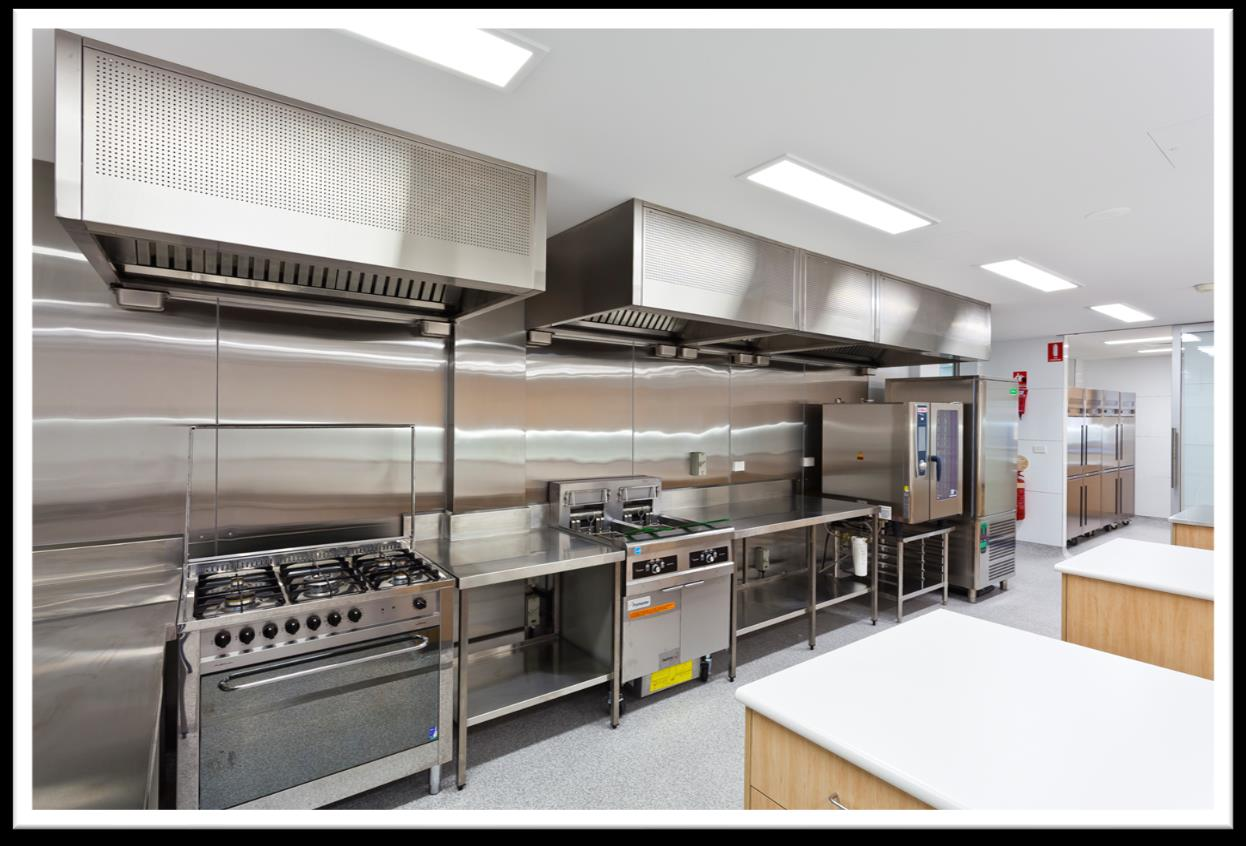
The canopy geometry and its position need to suit the appliance line, heat and vapour released by the cooking process.
View service detailsSystem examples
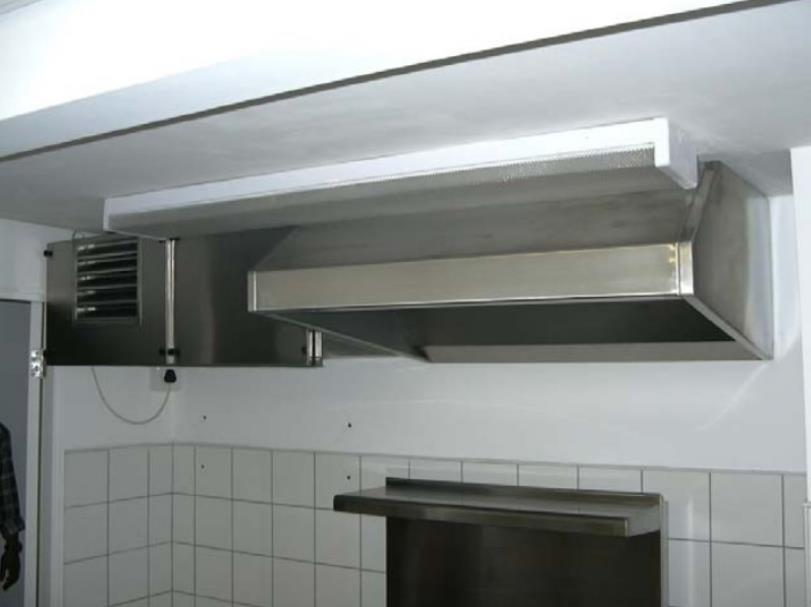
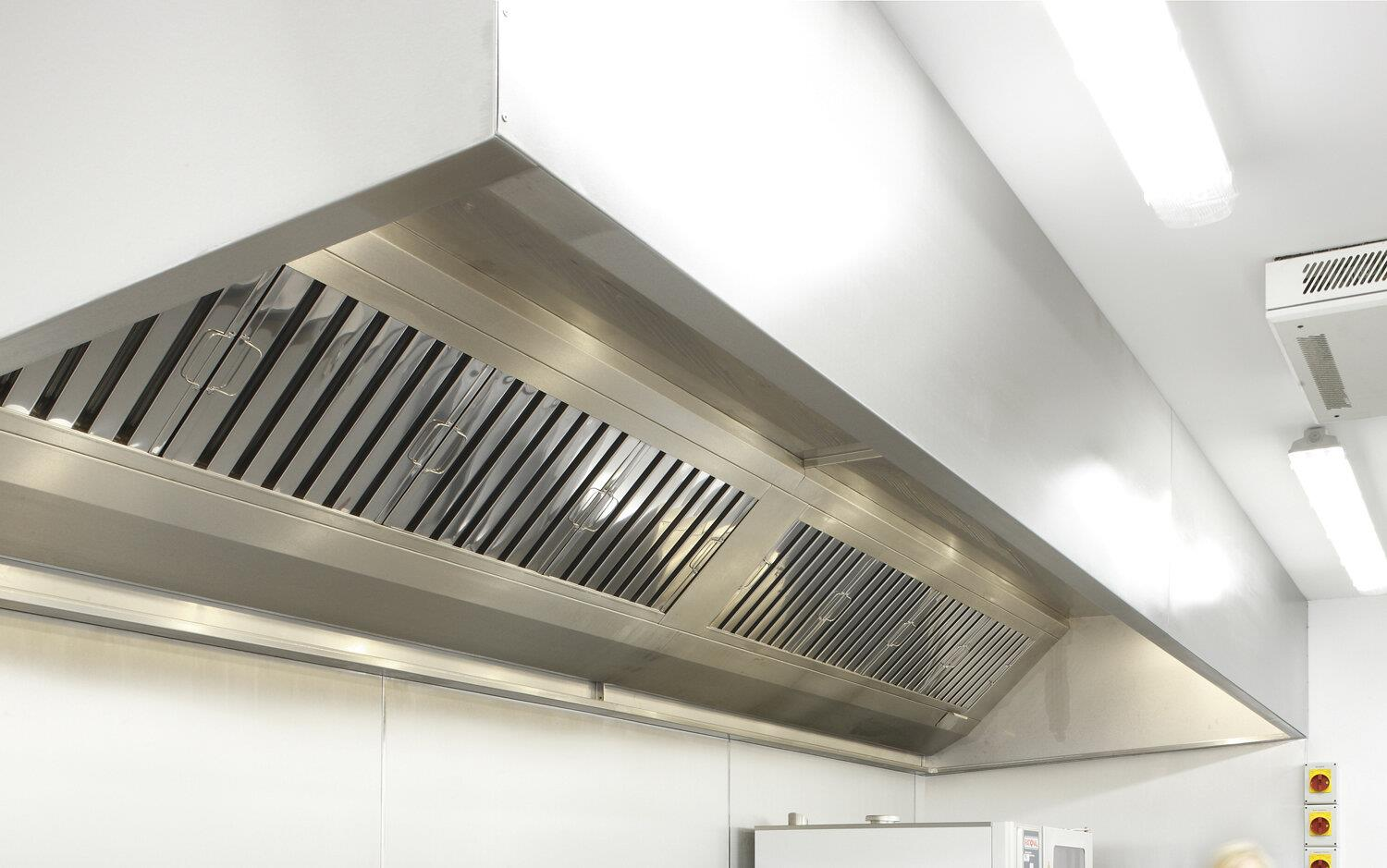
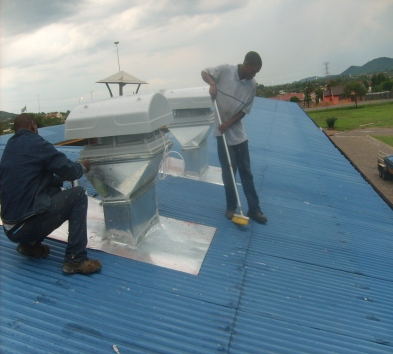
Photos from the supplied product brochures.
Select a photograph for a larger view at its original resolution.
 View photograph
 View photograph
 View photograph
 View photograph
Process & design
Plan the airflow, drawings and approval requirements before installation.
Share the cooking-equipment list, fuel type, layout, location and known constraints.
Consider capture, make-up air, duct route, fan, treatment and discharge.
Agree equipment, drawings and the quotation.
Plan supply and installation around site access and approvals.
Mechanical CAD drawings support coordination and submissions. Required engineering sign-off must come from a competent engineer.
Start project enquirySystems & filtration
Compare extraction, UV treatment, carbon filtration and fire protection for your cooking equipment and site. Grease, smoke and odour need to be considered separately when selecting treatment and a discharge route.
Read the filtration guideUV treatment is selected for the cooking duty, grease filtration and airflow. Specialist installation and servicing must follow the manufacturer’s instructions.
Read the EMEX UV treatment guideWall and island canopies, grease filters, fans and replacement air are selected to suit the cooking line, duct route and discharge point.
Read the VENTPRO extraction systems guideENVIRO offers recirculation and low-level discharge configurations. The supplied literature limits recirculation to light cooking without gas-fired equipment. Fresh air, heat load and approval requirements must be checked for the selected model.
Read the ENVIRO filtration guideSpecialist fire protection covers the cooking appliances, canopy, plenum and duct. The ANSUL guide outlines the equipment and design considerations.
Read the Kitchen fire suppression guideOwner-led service
David Thomas leads Air-Flow Systems, supplying and installing commercial kitchen extraction, ventilation and related systems across Cape Town and the Western Cape.
We work with restaurant operators, contractors and project teams on new kitchens, refurbishments and extraction upgrades. Cooking equipment, replacement air and the duct route are considered together before the scope is agreed.
Your project brief
Select the available details and transfer the summary to the enquiry form.
Interactive checklist
Select what you know. Other details can be confirmed later.
Nothing is sent until you submit the enquiry form. Continue transfers your selections to the enquiry form. When browser storage is available, a copy is kept in this tab for up to 30 minutes and removed when transferred. No contact details are stored by this checklist.
Project guidance
Read the equipment summaries below. Installation and servicing require the current manufacturer instructions.
Who we are, the services available and how to start a project.
Air-Flow Systems helps commercial kitchen projects in Cape Town and the Western Cape bring extraction, filtration and related services together.
We assess the cooking equipment, canopy, duct route and discharge together.
Kitchen extraction canopies; EMEX and VENTPRO ventilation products; UV and carbon filtration; ENVIRO options; fire-suppression coordination; cold and freezer rooms; and air-conditioning. Availability and the final scope are confirmed for each project.
Share the kitchen layout, site constraints and drawing requirements. A competent professional must provide any required engineered design or sign-off.
Tell us your suburb, business type, whether this is a new or existing kitchen, the cooking equipment and fuel type, and the problem or outcome you want to address. Plans, dimensions and clear site photographs help shape the next discussion.
Reference: Air-Flow Systems company introduction.
Canopy types, system coordination and information needed for selection.
A canopy is one part of a complete extraction system. Its arrangement needs to suit the cooking line, the room and the route out of the building.
The supplied range includes wall-mounted and island canopies, display canopies, steam or dishwasher canopies, supply-air / return-jet options and low-level arrangements. These are different applications, not interchangeable selections.
Review the cooking equipment, canopy position, grease separation, duct route, fan, replacement air, discharge location and access for cleaning. Noise and neighbouring spaces also need to be considered at the design stage.
Dimensions, stainless-steel specification, lighting, filters and other accessories are confirmed for the selected model and site. Drawings and a project quotation should define what is included before work proceeds.
Provide a plan or sketch, equipment dimensions and fuel types, ceiling information, possible duct routes and photographs of the cooking line and building exterior. Identify any existing extraction or ventilation concerns.
Reference: Air-Flow Systems Canopy Extraction Hoods, pp. 2-6.
Recirculation and low-level discharge, with the important application limits.
ENVIRO reference material describes recirculation and low-level external discharge as separate configurations. The distinction matters before a system is selected.
The supplied document limits recirculating units to light cooking without gas-fired equipment. It also requires adequate fresh-air provision and consideration of the cooking heat load. Filtration does not remove the need to assess the room environment.
Low-level discharge sends treated air outside. The supplied brochure allows gas-fired equipment in this configuration, excluding open-flame grilling. Review the outlet, cooking process, fuel, neighbouring spaces and site conditions separately from recirculation.
The system combines grease separation, particle filtration, carbon odour filtration and a fan. Capacity and filter replacement requirements depend on the selected unit.
Share the equipment and fuel list, cooking intensity, available floor or ceiling space, fresh-air provision, possible outside-wall access and any odour or smoke concerns. The appropriate professional must confirm the design and approval requirements.
Reference: Air-Flow Systems ENVIRO brochure, ACS-DOC-100094 Rev. A, pp. 2-5.
EMEX UV treatment, system requirements and maintenance.
The EMEX product literature describes UV treatment alongside mechanical grease separation in commercial kitchen extraction. Suitability depends on the complete system.
Grease filters provide the first separation stage. UV treatment acts on part of the remaining cooking effluent within the extraction system.
Review the cooking process, airflow, canopy configuration, duct route, discharge and any additional filtration needs together. A UV component should not be selected independently of the ventilation design.
The technology involves UV and ozone. Selection, controls, access and servicing require a competent specialist and current manufacturer instructions.
List cooking equipment and fuel types, describe smoke or odour concerns, and provide available drawings and photographs. For an existing installation, identify the model and its current service documentation where available.
Reference: EMEX UV Technology Hoods, Ventpro, pp. 2-4.
ANSUL R-102 equipment and project coordination.
The supplied ANSUL R-102 overview describes a restaurant fire-suppression system for cooking appliances and associated extraction equipment. The actual hazards drive the design.
The reference covers cooking appliances together with associated hoods, ducts and plenums. The system design must be checked against the equipment, layout and current manufacturer requirements by the appropriate qualified specialist.
The R-102 overview describes appliance-specific nozzle arrangements and overlapping protection arrangements. These are design options to assess, not permission to move or replace appliances without a specialist review.
Share the equipment schedule, fuel types, canopy and duct drawings, and the intended kitchen layout. Confirm the specialist design, installation, commissioning and ongoing service responsibilities within the project scope.
Provide the system identification, available commissioning and service records, and details of any equipment or layout changes. Ask the responsible specialist to assess whether the installed protection remains appropriate.
Reference: ANSUL R-102 Product Overview, Johnson Controls, 2018, Form F-2013152-06.
VENTPRO system families and how the components fit the application.
The VENTPRO reference range brings together canopy arrangements, replacement air, filtration and supporting components for commercial kitchen ventilation.
Wall and island extraction canopies serve different layouts. Display canopies address serving areas; condensate canopies address steam where grease is not the main requirement. The chosen application determines the specification.
Supply-and-extract arrangements incorporate make-up air into the canopy concept. The wider building air balance, cooking load and comfort requirements need to be considered with the extraction design.
The reference includes UV options and ecology units using particle collection and carbon treatment. Smoke, grease and odour are different concerns; treatment stages and discharge arrangements should be assessed for the site.
Filters, lighting, controls, ducting, fans, attenuation and fire-protection provisions form part of the wider project discussion. Confirm the selected components, access arrangements and specialist responsibilities in the agreed scope.
Reference: VENTPRO Brochure 2, pp. 2-8.
Before you make contact
Answers to quotation, service and design questions.
Start project enquiryStart with the project location, cooking-equipment list, fuel type, kitchen plan, possible duct route and any known smoke, odour or approval constraints. Photos and drawings can follow after direct contact.
Yes. Explain the symptoms and share what is known about the canopy, ducting, fan, make-up air and discharge point. The complete air path needs to be considered, not only one component.
Additional treatment may be relevant where grease, smoke, odour or a constrained discharge creates a project requirement. The suitable approach depends on the cooking duty and site conditions.
Consultancy and mechanical drawing support can form part of the project. Where engineering approval is required, it must be provided by an appropriately approved engineer.
Air-Flow Systems focuses on Cape Town and the Western Cape. Confirm the project location when making contact so the practical scope can be discussed.
The canopy or hood captures cooking effluent, but it must work with grease separation, ducting, an extractor fan, replacement air and a suitable discharge point. Share the cooking-equipment list and kitchen layout so these parts can be considered together.
Make-up air is replacement air for the air extracted from the kitchen. The supply and extraction arrangements need to be considered with the wider building, cooking load and comfort requirements.
This depends on the equipment and cooking duty. The supplied ENVIRO literature limits recirculation to light cooking without gas-fired equipment. Low-level external discharge is a separate configuration. Discuss the fuel types, fresh-air provision and site constraints before selecting either option.
The supplied canopy range includes steam and dishwasher applications. A condensate canopy addresses a different duty from grease extraction over a cooking line. Include the equipment type, position and room layout in your enquiry.
A useful quotation needs the cooking line, canopy arrangement, duct length and route, fan, replacement air, filtration, access and drawing requirements. Air-Flow Systems confirms the project scope before quoting; there is no single price that suits every kitchen.
Share changes to appliances, fuel types, canopy position or the duct route before work proceeds. Existing extraction and specialist fire protection need to be considered against the revised equipment and layout.
Project enquiries
Air-Flow Systems uses the details you provide to respond to your enquiry or privacy request.
We ask for your name, organisation, contact details and project information. The optional enquiry-source field helps us understand which channels bring enquiries; you can change it or leave it blank. Share only what is needed, without confidential documents or sensitive personal information.
FormSubmit processes the form for email delivery. Its documentation states that submissions remain in its archive for 30 days. Email copies received by Air-Flow Systems are handled separately.
To request access, correction or deletion, use the enquiry form and choose “Privacy request”.
Google Analytics is optional and loads only after you allow it. It measures visits and enquiry activity without receiving your form answers. Advertising features are disabled. Analytics cookies expire after 90 days; use Analytics preferences to decline or withdraw your choice.